7 Day Trips from Lisbon Worth the Drive
Transformation Tribesa · September 22, 2026
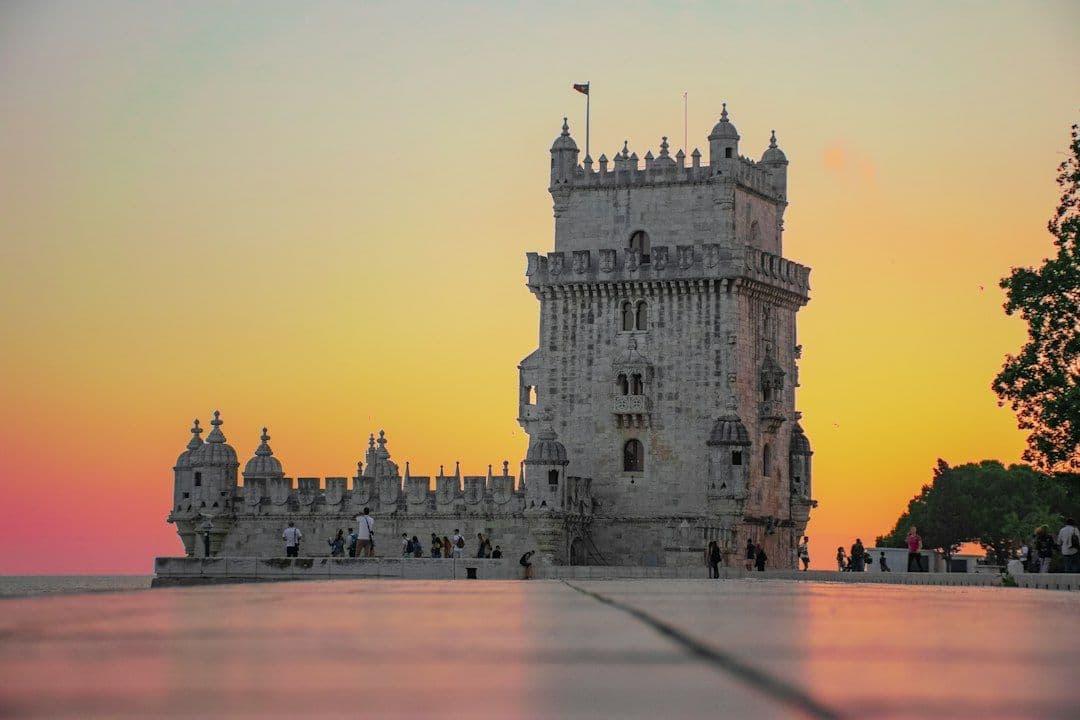
Lisbon rewards more than just city days. Within about ninety minutes of the capital sits a startling range of landscapes: fairytale palaces, surf breaks, Roman ruins, and a walled medieval town, and most of it is reachable without renting a car. If even one day of your Lisbon itinerary is free, these are the day trips from Lisbon worth spending it on.
The Best Day Trips from Lisbon, Ranked by Ease
Each of the seven below pulls from a different part of the region: coastal, inland, hill town, historic city. Pick based on what your Lisbon days have actually been missing rather than trying to cram more than one into a single outing.
1. Sintra: Palaces in the Clouds
Sintra sits in a microclimate of its own, cooler and mistier than Lisbon thanks to the hills that trap Atlantic cloud cover, which is exactly why nineteenth-century royalty built pastel palaces up there instead of staying in the city below. Pena Palace gets the postcard shots, but Quinta da Regaleira's initiation well and the Moorish Castle's ramparts are worth the extra hour if you only budget time for one stop. The non-obvious detail: the palaces are spread across the hillside rather than clustered together, so trying to see three in one afternoon usually means seeing none of them properly. Trains from Rossio station run frequently and take under an hour [VERIFY current frequency and fare]; driving takes about 30 to 40 minutes without traffic, though parking near the historic center fills early. Go first thing, by mid-morning the hillside road is a single-file queue of tour buses.

2. Cascais and Estoril: A Beach Day Without a Car Rental
Cascais and Estoril sit on the same train line and share a boardwalk, so you can treat them as one trip with two moods: Estoril's grand old casino-town glamour and Cascais's working fishing harbor turned laid-back resort town. The pull here is Boca do Inferno, a cliffside sea cave a twenty-minute walk from central Cascais where the Atlantic slams into volcanic rock, best seen an hour either side of high tide when the spray actually reaches the viewing platform [VERIFY tide timing on the day]. The train from Cais do Sodré runs directly to Cascais with no transfers and is the easier option than driving, since coastal parking is tight on weekends. Go in the late afternoon if you want the light for photos; the west-facing coastline turns gold a couple of hours before sunset.
3. Óbidos: A Walled Town You Can Walk in an Hour
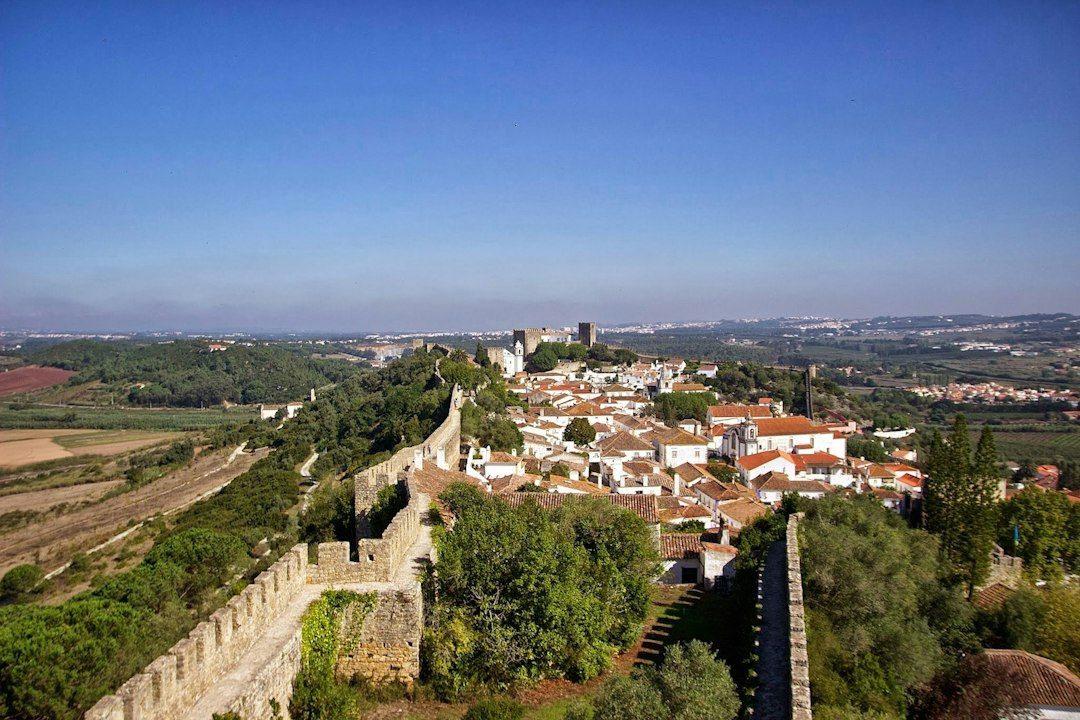
Óbidos is small enough that "day trip" undersells it. You could see the whole walled town in an afternoon and still have time for a proper lunch, which makes it the best option if your energy for sightseeing is already running low. The detail most guides skip: you can walk the full loop of the medieval wall itself, with no railing along most of it, for a view down into the whitewashed streets you don't get from ground level. Try a shot of ginjinha, a sour cherry liqueur served in a small chocolate cup from stalls along the main street; it's a local tradition rather than a tourist gimmick. There's no direct train, so the practical option is a direct bus from Lisbon's Campo Grande terminal, roughly an hour each way [VERIFY current schedule and fare], or about 55 minutes by car. Late morning avoids both the tour buses and the midday heat trapped inside the stone walls.
4. Arrábida and Setúbal: Cliffs, Dolphins, and the Best Seafood Outside Lisbon
This is the trip for anyone who assumes Portugal's beaches all look like Cascais. Arrábida Natural Park has turquoise water backed by forested limestone cliffs that looks closer to the Mediterranean than the Atlantic, and it's the one stretch on this list genuinely easier to reach by car than by public transport. Setúbal, the fishing town just past the park, is where to eat: order choco frito, fried cuttlefish, at a no-frills spot near the market rather than a waterfront restaurant with an English menu. Boat trips from Setúbal's harbor regularly spot the resident bottlenose dolphin population in the Sado estuary, a rarer sighting than most visitors expect this close to a capital city [VERIFY current tour operators and prices]. Driving takes about 45 minutes to Setúbal, closer to an hour with a detour through the park's viewpoints; a train reaches Setúbal but not the park itself. Go in the morning, before the afternoon sea breeze picks up and clouds the water.
5. Évora: Roman Ruins and a UNESCO Old Town
Évora is the furthest entry on this list and arguably the only one that deserves an overnight, but it's doable as a long day if you start early. A Roman temple stands intact in the middle of the old town, not roped off in a museum but sitting in an open square that locals walk past on their way to work, which is what makes the town feel lived-in rather than preserved for tourists. The Chapel of Bones, its interior walls lined with human skulls and bones from the sixteenth century, is the other unmissable stop: disquieting rather than gimmicky. Intercity trains from Lisbon's Oriente station take around ninety minutes [VERIFY current schedule and fare], the longest ride on this list; driving takes about the same once you account for parking outside the old town's narrow streets. Take a train that arrives by mid-morning, since return options thin out in the evening.

6. Ericeira: Surf Town Energy Without the Surf Lesson
Ericeira earned its official World Surfing Reserve status for the string of quality breaks along a short stretch of coast, but you don't need to surf to feel the town's particular energy. It's small, whitewashed, and genuinely built around the ocean rather than staged for visitors. The non-obvious move is to skip the main town beach and walk or drive out to Coxos or Ribeira d'Ilhas, where you can watch some of Europe's better surfers work a break from the cliffside rocks for free. There's no train, only a direct bus from Campo Grande, about 45 minutes [VERIFY schedule and fare], or roughly 40 minutes by car. Late afternoon is the move, both for the surf conditions and for grabbing a table at one of the cliffside restaurants before sunset fills them up.
7. Mafra: The Palace Lisbon Tourists Skip
Mafra's National Palace is enormous, built to rival anything in Europe during Portugal's eighteenth-century gold-boom years, and gets a fraction of the visitors Sintra does despite being just as striking. Its library alone houses tens of thousands of leather-bound volumes and is said to be patrolled at night by a small colony of bats kept specifically to eat book-damaging insects [VERIFY this detail against the palace's own current materials]. The scale is the real pull: entire wings feel abandoned in the best way, without the crowd management and roped queues you'll hit at Sintra's palaces. There's no train, only a direct bus from Campo Grande running roughly every hour, about 50 minutes [VERIFY schedule], or 40 minutes by car. Weekday mornings are close to empty; this is the one entry on the list where you genuinely don't need to arrive early.
If You Only Have One Day: The Best Pairing
Sintra and Cascais pair better than almost any other combination on this list because both are reachable by direct train from central Lisbon and sit close enough to each other that a driver, or a well-timed transfer, can link them without backtracking through the city. Do Sintra's palaces in the morning while the light and the crowds are both manageable, then head to Cascais for a late lunch by the harbor and a walk out to Boca do Inferno before the light turns gold over the water. It's the one day trip from Lisbon that genuinely delivers two very different moods without losing half the day to transit.